The story
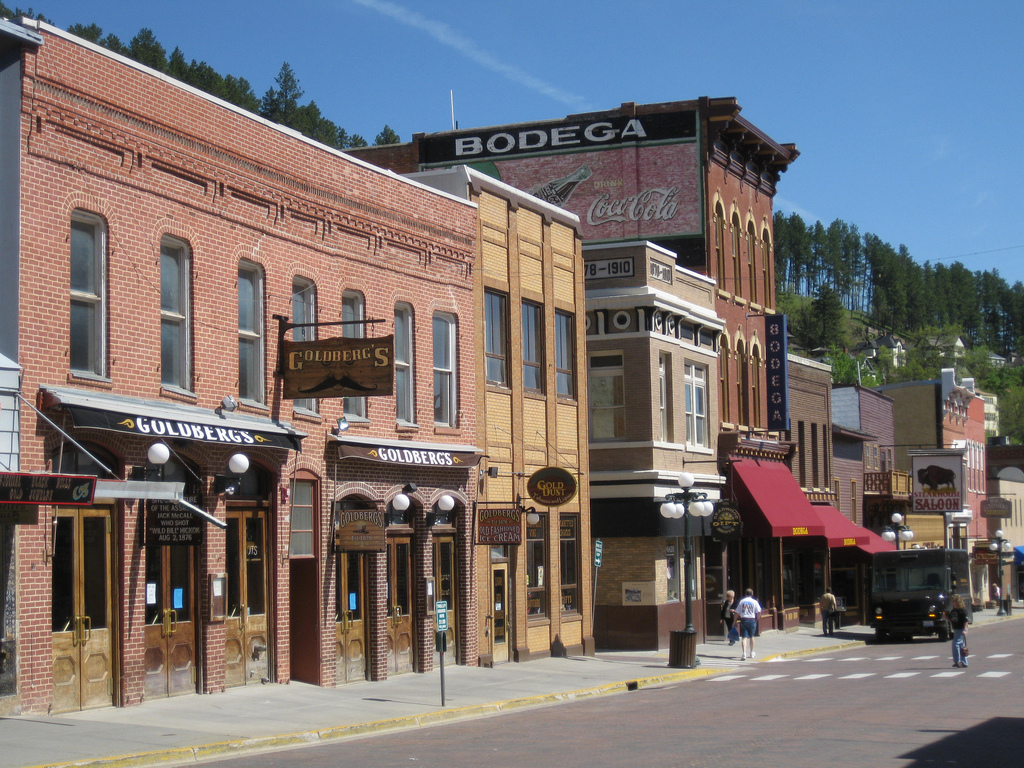
Deadwood exploded into existence in 1876 after gold was found in the surrounding gulch, on land still belonging to the Lakota under the 1868 Fort Laramie Treaty. On September 26, 1879, a fire reached eight kegs of gunpowder in a hardware store; the explosion destroyed some 300 buildings and left 2,000 homeless. The town rebuilt in brick within months, and the whole community was named a National Historic Landmark in 1961. By the 1980s Deadwood was fading — until the grassroots "Deadwood — You Bet" campaign passed a 1988 ballot measure legalizing limited-stakes gambling (effective 1989), making it the third legal gambling destination in the U.S. after Nevada and Atlantic City. Gaming revenue has funded Main Street's preservation ever since.
Everything that was here
- 1876–present · still open
Deadwood Main Street Historic DistrictHistoric District
A gold-rush boomtown, gutted twice by fire and left to fade, saved itself in 1989 by legalizing the very vice — gambling — that built it in the first place.
See the map in 1877 →
Did you know?
Connected places
Guardian Building
Cincinnati Music Hall
Crosley Field
Locke Historic District
Maker's Mark Distillery
Explore the full web of connections on the map.
Nearby history
The Midnight Star
Old Style Saloon No. 10
Adams Museum
Bullock Hotel
Historic Franklin Hotel
The Gem Theatre
Know something about Deadwood Main Street Historic District? An old photo, a date, a memory of what stood here before?
Add it on the map